Maria L. Daza Torres

Maria L. Daza Torres

Postdoctoral fellow

University of California, Davis

Bio

My passion lies in applying mathematics to real-world multidisciplinary challenges and seeking practical solutions that involve different areas of knowledge. I also enjoy working on pure mathematical problems due to their intrinsic beauty. Currently, I’m a postdoctoral fellow at the University of California, Davis. My research focuses on modeling infectious diseases by combining traditional surveillance data and wastewater-based epidemiology using mathematical and statistical models. I have extensive experience in Bayesian statistics, inverse problems, optimization algorithms, and mathematical modeling in epidemiology.

Interests
  • Bayesian Inference and Statistical Modeling
  • Uncertainty Quantification in Inverse Problems
  • Epidemiological Models
  • Optimization Problems
Education
  • PhD in Applied Mathematics, 2018

    Centro de Investigacion en Matematicas, CIMAT

  • MSc in Applied Mathematics, 2014

    Centro de Investigacion en Matematicas, CIMAT

  • BSc in Mathematics, 2008

    Universidad del Atlantico

Skills

Technical
Python
R
Data Science
Hobbies
Soccer
Yoga
Cuber

Projects

*
Improving Modular Patient Admission Capacity Through Scalable Solutions (IMPACTS)
The Improving Modular Patient Admission Capacity Through Scalable Solutions (IMPACTS) Project, implemented by the University of California, Davis, is funded under the National Disaster Medical System (NDMS) Modular/Convertible Capability Pilot under the direction of the Defense Health Agency (DHA) as the technical and administrative sponsor. The project has developed and sourced a modular, scalable, joint military-civilian patient care facility, referred to as the Modular Surge Facility (MSF), which may be utilized to quickly expand hospital inpatient capacity during patient surge events. During mass casualty and patient surge events, healthcare systems must efficiently manage bed capacity, triage effectiveness, and resource allocation. Additionally, they must rapidly scale patient admissions to meet increasing demand in order to prevent overcrowding, care delays, and system collapse. However, traditional hospital admission models often lack the predictive and adaptive capabilities needed to respond effectively to sudden patient influxes. The IMPACTS project intends to provide a decision tool (Patient Surge Tool) to managing hospitals to help determine how expansion of patient care capacity through the utilization of an MSF will affect hospital throughput and other operational metrics. This document describes the methodology behind this approach.
Improving Modular Patient Admission Capacity Through Scalable Solutions (IMPACTS)
Wastewater Disease Surveillance
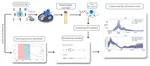
Wastewater-based epidemiology offers a promising and less biased alternative to current passive surveillance methods for respiratory viruses, demonstrating correlations with reported cases, positivity rates, and hospitalizations. However, modeling disease dynamics based on wastewater presents challenges due to the potential impact of various factors on the accuracy and reliability of the data. This project addresses knowledge and methodology gaps in using wastewater data to monitor viral respiratory diseases by developing and implementing a comprehensive modeling framework incorporating data filtering methods, spatial-temporal modeling, and optimization techniques.
Wastewater Disease Surveillance

Recent and Upcoming Talks & Posters

Contact

Please contact…